To outsiders, a fandom may seem to serve no purpose whatsoever. It appears those who participate do so at the expense of being productive and being accepted by those around them. They are places where the geeks of the world gather to waste time discussing their geeky hobbies. Those of us that are part of a fandom know better—we know all of the good our fandom has to offer. Maybe not to a non-fan; they will get nothing out of our forums and will continue to scoff at us and ridicule us. But to each other, the fandom provides a place to share our passion, a place of acceptance, a place where we have a voice.
For me, the Game of Thrones fandom embodies passion. I have mentioned in a previous post a couple of sites that offer fun ideas and opportunities to connect with fellow fans. These sites fuel fans’ passion by providing places for fans to share themed artwork, recipes, theories, and an assortment of other geeky posts. Unlike the real world, these sites are places where geekiness—or, in other words, passion—is celebrated. The GoT fandom is not unique in our passion; it’s kind of the staple for any fandom, as seen in the blogs of my classmates.
Classmates Casey and Anthony share a love of music, albeit from different genres. Their blogs depict avid fans whose passion shines through in their writing. Casey describes how her love of the Grateful Dead was fueled at a young age, and in adulthood sought out the fandom online through websites like Reddit, dead.net, and gdao.org. She evaluates the differences between the online communities and cites the value set of dead.net users as what sets it apart from the others. While the Reddit community, for example, struck her as being in competition for who was the biggest fan, dead.net focused on shared experiences and support for one another. For Casey, this community exemplified the values of the Grateful Dead and their followers.

Anthony also discusses passion as driving the fandom, and like Casey’s view of Deadheads, he sees the values of the EDM community as central to that passion. Before coming across Anthony’s blog, I had the misconception that he argues in his first post is misguided: I saw EDM fans as being rave-obsessed druggies. I was utterly unaware that I shared the values that guides the community: peace, love, unity, and respect. The value for PLUR connects this community just as much as the music itself does.

Casey and Anthony’s blogs demonstrate how shared passion can bring a group of people together, as does my own writing on Game of Thrones. Through my classmates writing I’ve seen how fandoms can do more than just bring people together, they can also provide a place where fans feel accepted by others, thus enabling self-acceptance.
My own fandom is such a place for many people. While I personally started watching Game of Thrones when I was fairly comfortable in myself and therefore needed no assurance from others that my passion for GoT was just, this is not the case for all fans. Super-fans of the show are often seen as fairly nerdy; this is true of fans of the broader genre of sci-fi/fantasy as well. For many who are fans of the genre, fandoms are safe-havens against the cruel words of outsiders. Seeing others who share your passion makes it easier to be open about it, creating an atmosphere optimal for self-acceptance.
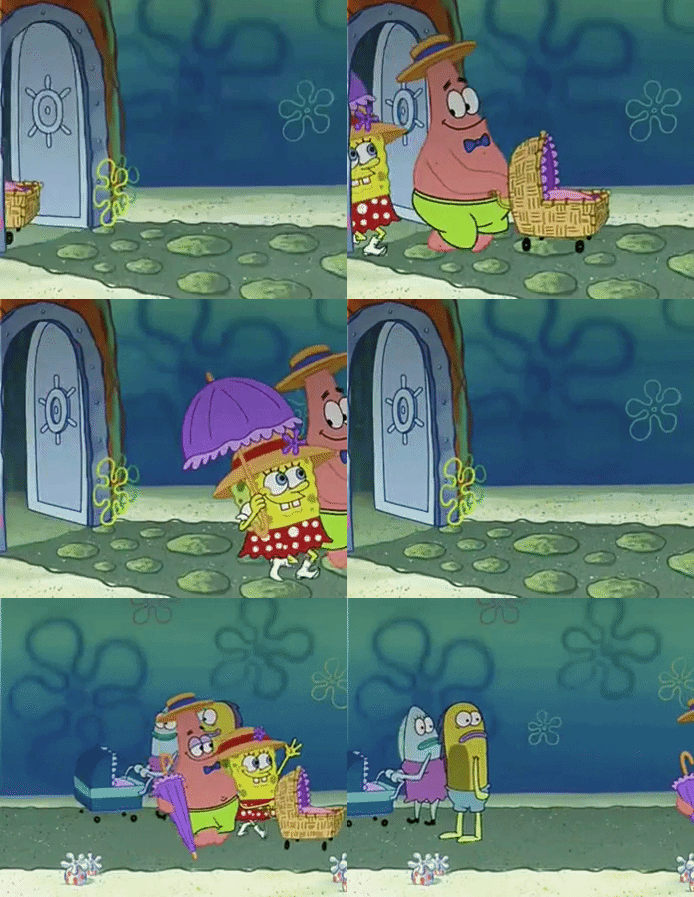
Classmates with fandoms in other genres have experienced this as well. For my classmates Jacob and Megan, their fandoms helped them find self-acceptance and allowed them to become more open about their sexuality. The media can be very influential for adolescents coming to terms with their sexuality. For Jacob, Spongebob Squarepants was a symbol for someone who was comfortable enough in his own skin to ignore the norms of traditional masculinity, an attitude that Jacob expresses he’s taken to heart: “Absorbent and yellow and my role model is he!” Having a role model with such unwavering positivity defined Jacob’s approach to life, showing the enormous power that a fandom can have on its members.
Megan devoted her blog to another pro-queer television series: Glee. A hugely popular show within her friend group and across the country, Glee depicts a group of high school students who attempt to be unapologetically themselves, whether that means embracing the stereotypes of a theatre/singing geek or being an openly gay high school student. For Megan, seeing a lesbian couple become more comfortable with their sexuality and seeing them break the stereotypes that come with being gay women told her that being gay wasn’t a bad thing and that she didn’t have to be butch to be gay. For Megan, Glee represented that being gay didn’t mean changing who she was, but rather embracing every part of herself.

Fandoms can create spaces where people feel safe and accepted, as demonstrated by sci-fi/fantasy fandoms as well as the fandoms that my classmates participate in. Jacob and Megan both give examples of how fandoms can inspire self-acceptance, whether that means breaking away from traditional gender norms or embracing them in order to feel true to oneself. One last way that my classmates have shown me fandoms can create a better world is by offering fans a platform for them to feel heard.
The blogs of my classmates Nicole and Erin both exhibit some of the ways that fandoms can allow fans to inspire others. In her blog, Nicole looks at how influencers on social media can use their platforms to reach hundreds of thousands, if not millions, of other users. In our class, we talked a bit about a few of the more major influencers. Some of these influencers stand for noble causes, others use their brands to push products and make money. During Week 2, we analyzed the influence of Kim Kardashian in popular culture. In the pop-cult channel of Slack, some students, myself included, brought up the ongoing feud between the Kardashian sisters and actress Jameela Jamil over the Kardashians taking sponsorships by harmful diet products. The Kardashian’s brand is often centered around having the “perfect” body, while Jamil argues for body positivity and the abandonment of diet culture. Instagram influencers are not unanimous in what they promote; brands can focus on an array of topics, from fashion, to body positivity, to health and fitness, each with their own benefits and selling points. Nicole draws attention to several of her favorite Instagram influencers in her blog. One that stood out to me as genuinely caring about her followers was Kayla Itsines. Nicole described how Itsines encourages followers and uses her brand in a positive, uplifting manner. She also discusses Itsine’s passion for health and fitness driving her brand as well as her fandom. Nicole shows how Instagram can give users a voice and allows them to build a following. If used for good, Instagram influencers have the power to build a better world.

Erin also demonstrates how fandoms can provide a platform for improving society. Erin decided to use this project as an opportunity to write about a topic she is passionate about, perhaps giving her a voice to make a difference when it comes to gender inequality in the world of sports. Her blog became a place to examine the issues that female athletes face, from mistreatment, harassment, and abuse by superiors, to the wage gap that is especially prevalent in sports. For each issue, she provided examples and statistics and gave concrete strategies for how the issue could be addressed. Erin’s blog incited outrage in me and inspired at least one person who read it, demonstrating the power of words. If she were to grow an audience for her blog beyond this class, she could illicit real change. That is the power that fandoms hold: with enough people standing echoing a sentiment, together their voices can be heard.

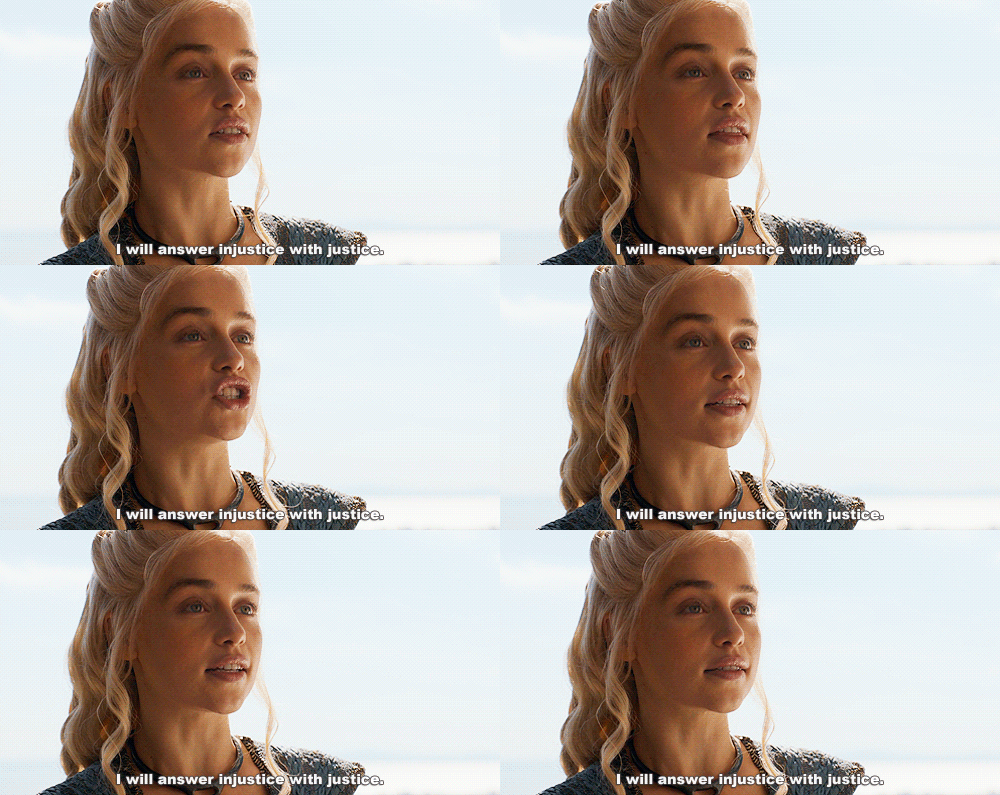
Different fandoms represent different possibilities; driving each fandom is passion—passion for a movie, series, book, or video game; passion for being unapologetically oneself; passion to create a more just world. In my own fandom, Game of Thrones, Deanerys is once advised to answer injustice with mercy, to which she responds: “I will answer injustice with justice”. Daenerys’ passion reflects that of my fandom, as well as every fandom. Every fandom shares in common passion, and it is thanks to this passion that fandoms have the power to create a better world, one fan at a time.
 Winter is Coming.